In recent years, there has been a significant advancement in natural language processing (NLP) and artificial intelligence (AI), thanks to the development of powerful models known as foundation models. These models, such as OpenAI’s GPT-3, have revolutionized the field of NLP and are transforming various industries. In this article, we will explore what foundation models are and why there is a need for a foundation model.
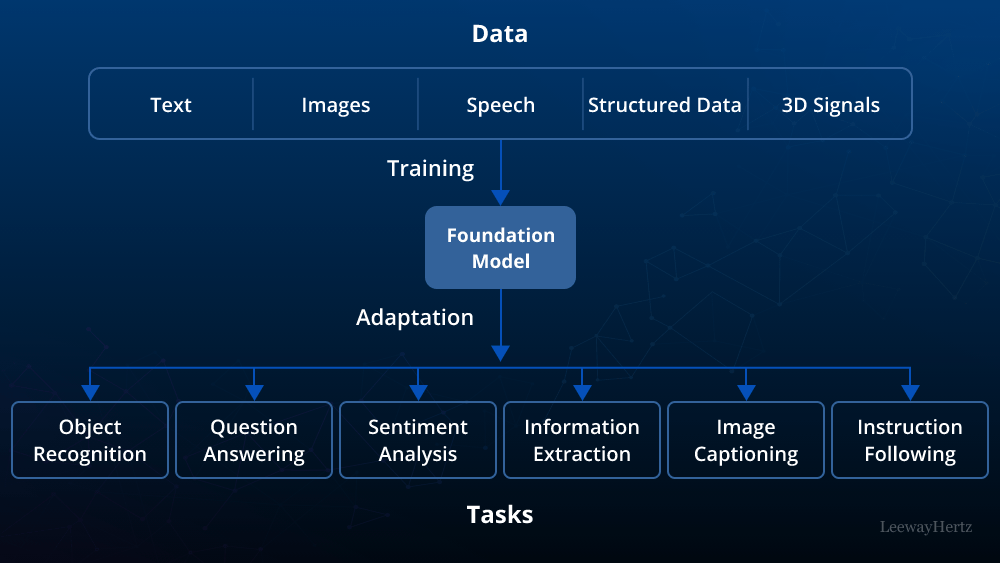
1. Definition of Foundation Models:
Foundation models are large-scale language models that are trained on massive amounts of text data.
They have a deep understanding of human language and can generate coherent and contextually relevant responses to text prompts.
These models are designed to perform a wide range of language-related tasks, including text generation, summarization, translation, and sentiment analysis.
2. Training Process:
Foundation models are trained using a method called unsupervised learning, where they learn from a vast corpus of text data without specific task-oriented labels.
They utilize techniques like deep neural networks and transformer architectures to capture the intricate patterns and structures of human language.
3. Contextual Understanding:
One of the key advantages of foundation models is their ability to understand the context of a given prompt.
These models can generate responses that are not only relevant to the prompt but also demonstrate an understanding of the context provided.
This contextual understanding allows for more accurate and natural language generation.
4. Versatility:
Foundation models are highly versatile and can be applied to a wide range of applications across various domains.
They can generate human-like text for creative writing, provide conversational agents for customer support, assist in research and data analysis, and even aid in educational purposes.
5. Democratizing AI:
Foundation models have played a crucial role in democratizing AI by making state-of-the-art language processing capabilities accessible to a broader audience.
These models can be used by developers, researchers, and businesses without requiring extensive knowledge or resources to train their own models from scratch.
6. Efficiency and Cost-Effectiveness:
Developing a powerful language model from scratch can be a time-consuming and resource-intensive process.
By leveraging existing foundation models, organizations can save significant time and costs, as they can build on top of the pre-trained capabilities of these models.
7. Continual Learning and Improvement:
Foundation models can be continually fine-tuned and updated on new data, allowing them to adapt to evolving language patterns and improve their performance over time.
This continual learning process ensures that the models remain up-to-date and accurate, even as language evolves and new information emerges.
8. Ethical Considerations:
While foundation models offer numerous benefits, they also raise important ethical considerations.
Issues related to bias, privacy, and responsible AI usage need to be addressed to ensure that these models are used in a fair and responsible manner.
In conclusion, foundation models have emerged as powerful tools in the field of natural language processing, providing an unprecedented level of language understanding and generation capabilities. The need for a foundation model stems from their versatility, efficiency, and potential to democratize AI. As these models continue to evolve and be refined, they will undoubtedly shape the future of AI-driven applications and contribute to advancements in various industries. However, it is crucial to approach their usage with ethical considerations to ensure responsible and unbiased deployment.
To Learn More:- https://www.leewayhertz.com/foundation-models/


Leave a Reply