Introduction:
Artificial Intelligence (AI) is rapidly transforming the manufacturing industry, ushering in a new era of efficiency, precision, and cost-effectiveness. In this article, we will delve into four key applications of AI in manufacturing: Predictive Maintenance, Inventory Management, Production Planning, and Procurement. These use cases showcase the remarkable capabilities of AI in streamlining operations, reducing downtime, optimizing resources, and ultimately enhancing the overall productivity of manufacturing processes.
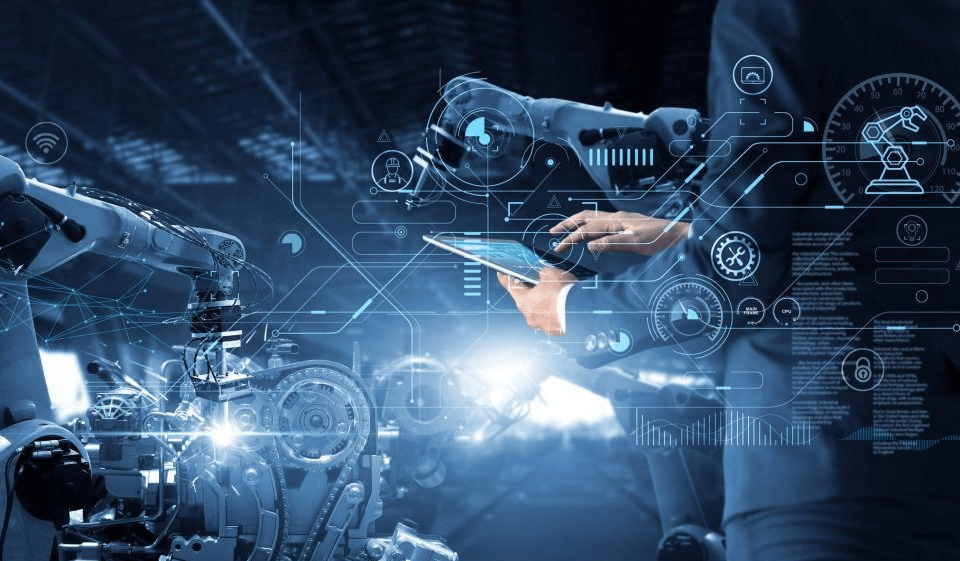
AI in Predictive Maintenance:
Predictive maintenance has emerged as a game-changer in the manufacturing sector, leveraging AI to foresee equipment failures before they occur. By analyzing historical data and real-time sensor information, AI algorithms can predict when machinery is likely to malfunction. This proactive approach helps manufacturers schedule maintenance activities precisely when needed, minimizing downtime and extending the lifespan of equipment.
For example, a manufacturing plant utilizing AI in predictive maintenance can monitor the performance of critical machinery, detect anomalies in data patterns, and alert maintenance teams to potential issues. This not only reduces unplanned downtime but also enables cost savings through efficient resource allocation and optimized maintenance schedules.
AI in Inventory Management:
Inventory management is a critical aspect of manufacturing, and AI brings unprecedented accuracy and efficiency to the process. AI algorithms can analyze historical data, market trends, and demand forecasts to optimize inventory levels. By dynamically adjusting stock levels in real-time, manufacturers can avoid overstocking or understocking, leading to cost savings and improved customer satisfaction.
In practice, AI in inventory management can automatically reorder materials when stock levels are low, prioritize items based on demand forecasts, and even factor in external variables like weather or geopolitical events that may impact the supply chain. This ensures that manufacturers maintain optimal inventory levels, reducing carrying costs while meeting customer demands seamlessly.
AI in Production Planning:
AI in production planning is transforming traditional manufacturing strategies. By leveraging machine learning algorithms, manufacturers can analyze vast datasets to optimize production schedules, allocate resources efficiently, and enhance overall operational agility. AI considers variables such as machine capabilities, workforce availability, and demand fluctuations to create dynamic and adaptive production plans.
For instance, in a smart manufacturing facility, AI-driven production planning can adjust schedules in real-time based on unforeseen events, such as machine breakdowns or rush orders. This adaptability improves resource utilization, minimizes production delays, and ultimately enhances the overall efficiency of the manufacturing process.
AI in Procurement:
Procurement is another area where AI is revolutionizing traditional practices. AI technologies, such as natural language processing and machine learning, can analyze supplier data, market trends, and historical procurement patterns to optimize sourcing strategies. This results in improved cost-effectiveness, supplier relationship management, and overall procurement efficiency.
In a manufacturing setting, AI in procurement can automate routine tasks, such as invoice processing and supplier communication, allowing procurement teams to focus on strategic decision-making. Additionally, AI algorithms can identify potential risks in the supply chain, enabling proactive measures to mitigate disruptions and ensure a steady flow of materials.
Conclusion:
In conclusion, the integration of AI in manufacturing, particularly in predictive maintenance, inventory management, production planning, and procurement, is reshaping the industry landscape. Manufacturers embracing these AI applications are experiencing increased efficiency, reduced costs, and enhanced competitiveness in the global market. As technology continues to evolve, the role of AI in manufacturing is set to expand further, unlocking new possibilities and efficiencies for the future of the industry.

 Jasper's Video Blog
Leave a comment