Data is the backbone of the modern world. From businesses making strategic decisions to researchers unraveling the mysteries of the universe, data drives our understanding and decision-making processes. However, raw data is often like a buried treasure waiting to be unearthed and polished. This is where Exploratory Data Analysis (EDA) comes into play. In this article, we will delve into the world of EDA, its importance, methods, and how it can transform data into actionable insights.
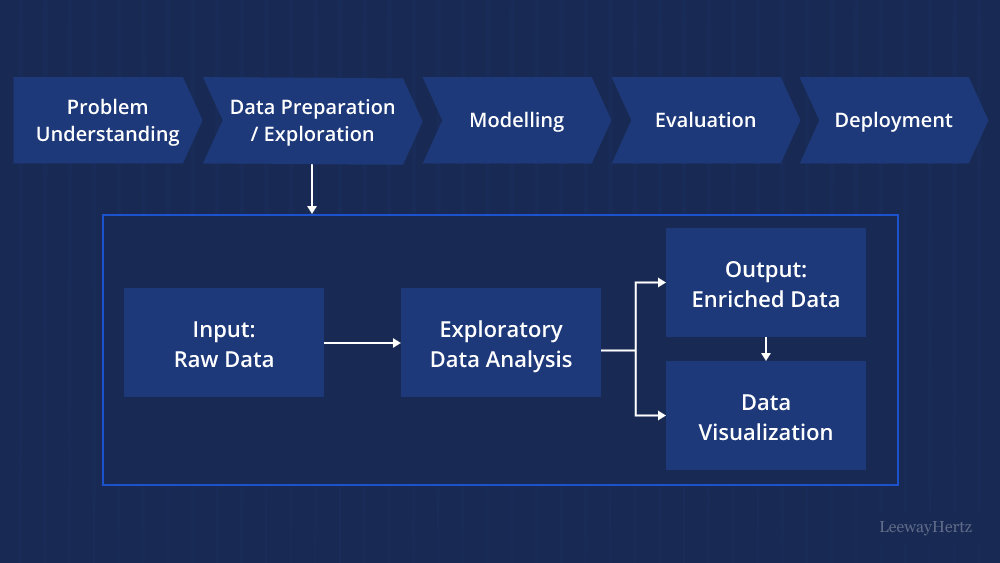
Understanding Exploratory Data Analysis (EDA)
Exploratory Data Analysis is the process of visually and statistically summarizing and interpreting the main characteristics of a dataset. It serves as a critical first step in data analysis, allowing analysts to get a sense of the data’s distribution, structure, and potential patterns. EDA does not involve complex modeling or hypothesis testing; instead, it focuses on the initial exploration of the data.
The Importance of EDA
- Data Understanding: EDA helps analysts gain a deep understanding of the dataset. By visualizing data in various ways, they can grasp its size, shape, and unique characteristics.
- Data Cleaning: EDA often reveals missing values, outliers, or inconsistencies in the data. Identifying and addressing these issues is crucial for building reliable models.
- Pattern Recognition: EDA can uncover hidden patterns, trends, and relationships in the data. These insights can be invaluable for decision-making.
- Feature Selection: In machine learning, EDA can aid in selecting the most relevant features or variables for building predictive models, enhancing model performance.
Methods of Exploratory Data Analysis
- Descriptive Statistics: EDA typically starts with basic statistical measures like mean, median, mode, standard deviation, and range. These statistics provide an initial overview of the data’s central tendencies and dispersion.
- Data Visualization: Visualization is a powerful EDA tool. Techniques such as histograms, box plots, scatter plots, and bar charts help reveal data distributions and relationships between variables. Tools like Python’s Matplotlib and Seaborn make data visualization accessible.
- Outlier Detection: EDA often involves identifying outliers, which are data points that deviate significantly from the majority of the data. Outliers can skew analysis and should be treated carefully.
- Correlation Analysis: Analyzing correlations between variables can highlight potential relationships. The Pearson correlation coefficient is commonly used to measure linear relationships, while other methods, like the Spearman rank correlation, capture non-linear associations.
- Data Transformation: Transformations like log transformation or standardization can help make the data more suitable for analysis and modeling. These transformations often make data distributions more symmetrical and reduce the impact of outliers.
- Clustering and Dimensionality Reduction: EDA can include techniques like clustering and dimensionality reduction (e.g., Principal Component Analysis) to reveal hidden structures in the data and reduce its complexity.
A Real-World Example
Imagine you are working for a retail company and have been given a dataset of sales transactions. Before building any predictive models or making business recommendations, you decide to perform EDA. Here’s what you might uncover:
- Data Distribution: You find that sales are heavily skewed, with a few products accounting for the majority of revenue. This suggests the importance of focusing on these high-performing products.
- Seasonal Trends: Through time-series analysis, you discover strong seasonal patterns in sales, indicating that certain months or seasons are more profitable than others. This insight can inform inventory management and marketing strategies.
- Customer Segmentation: Using clustering techniques, you identify distinct customer segments based on their purchasing behavior. This information can help tailor marketing campaigns to specific customer groups.
- Outliers: EDA reveals some unusually high sales values, which upon investigation, turn out to be the result of data entry errors. Correcting these errors is crucial for accurate analysis.
- Correlations: You find that promotions and discounts are strongly correlated with increased sales. This suggests that targeted promotions could boost revenue.
Conclusion
Exploratory Data Analysis is not a one-size-fits-all approach but rather a flexible toolkit for understanding and unlocking the potential within datasets. It is the foundation upon which data-driven decisions and advanced analytics are built. By investing time in EDA, analysts and organizations can ensure that their subsequent analyses and models are based on a solid understanding of the data, leading to more informed and effective actions. So, the next time you’re handed a dataset, remember the power of EDA in revealing the hidden insights that lie beneath the surface.

 Jasper's Video Blog
Leave a comment