In the ever-evolving landscape of artificial intelligence and machine learning, one term that has recently garnered significant attention is “Decision Transformer.” This cutting-edge technology represents a quantum leap forward in the field of AI, promising to revolutionize decision-making processes across various industries. In this article, we will delve into the concept of Decision Transformers, exploring their significance, applications, and the potential they hold for reshaping our future.
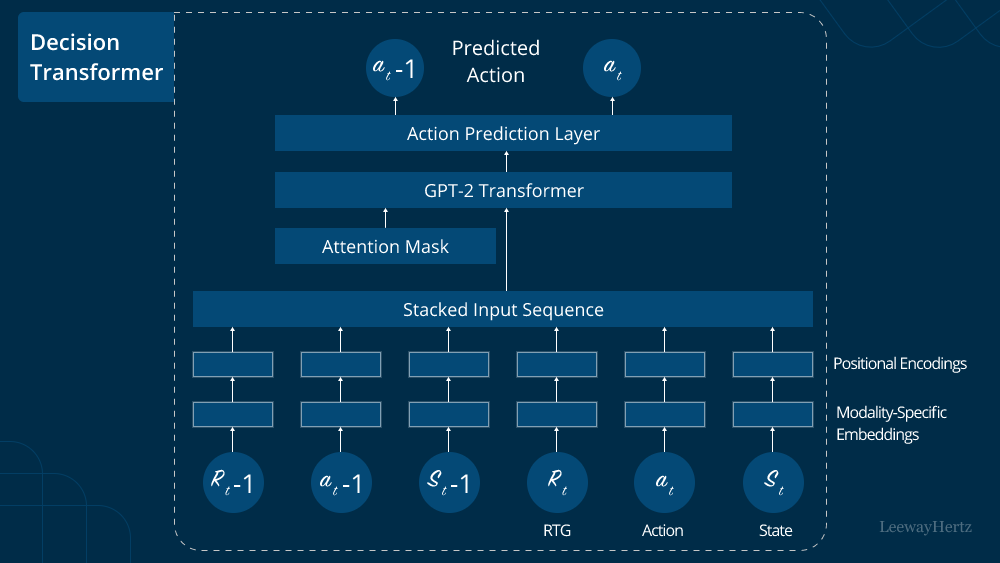
Understanding Decision Transformers
To comprehend the essence of Decision Transformers, it’s essential to have a grasp of the foundational technology behind them—transformers. Transformers are a class of deep learning models that have proven to be exceptionally adept at tasks involving sequential data, such as natural language processing and image recognition. They are characterized by their ability to process input data in parallel, making them highly efficient and scalable.
Decision Transformers take this concept to the next level. They are designed to handle not just sequential data but also decision-making processes. These models combine the power of transformers with reinforcement learning, enabling them to not only process information but also make informed decisions based on that information.
The Power of Reinforcement Learning
Reinforcement learning is a paradigm of machine learning where agents learn to make decisions by interacting with an environment. They receive feedback in the form of rewards or penalties based on their actions, allowing them to refine their decision-making strategies over time. Decision Transformers leverage this approach to make decisions that are not just based on patterns in data but also on the outcomes of previous decisions.
This integration of reinforcement learning with transformers empowers Decision Transformers to excel in dynamic and complex decision-making scenarios. Whether it’s optimizing supply chains, managing energy grids, or even playing complex games like chess and Go, Decision Transformers have the potential to outperform traditional decision-making algorithms.
Applications Across Industries
The versatility of Decision Transformers makes them applicable across a wide range of industries. Let’s take a closer look at some of the areas where these transformative models are making a significant impact:
- Healthcare: In the medical field, Decision Transformers can assist doctors in diagnosing diseases, recommending treatment plans, and even predicting patient outcomes. They can process vast amounts of patient data and medical literature, helping healthcare professionals make more informed decisions.
- Finance: In the world of finance, Decision Transformers are used for algorithmic trading, fraud detection, and portfolio optimization. These models can analyze market data in real-time and execute trades with precision, potentially maximizing returns for investors.
- Autonomous Vehicles: Self-driving cars rely on Decision Transformers to make split-second decisions on the road. These models can process sensor data, interpret traffic conditions, and navigate complex environments, ensuring passenger safety.
- Customer Service: Decision Transformers can enhance customer service by providing chatbots and virtual assistants with the ability to understand and respond to customer queries more effectively. This improves user experience and reduces response times.
- Manufacturing: In manufacturing, Decision Transformers optimize production processes, monitor equipment health, and predict maintenance needs. This leads to increased efficiency and reduced downtime.
Challenges and Ethical Considerations
While the potential of Decision Transformers is immense, it’s essential to acknowledge the challenges and ethical considerations associated with their deployment. One primary concern is the opacity of these models. Decision Transformers can be highly complex, making it difficult to interpret their decision-making processes. This lack of transparency raises questions about accountability and bias.
Additionally, the massive computational power required to train and run Decision Transformers can have environmental implications. Efforts are being made to make AI models more energy-efficient, but sustainability remains a concern.
The Road Ahead
Despite the challenges, Decision Transformers represent a significant step forward in the field of AI. As researchers and developers continue to refine these models, we can expect to see even more remarkable applications emerge. The integration of explainability and fairness into Decision Transformers is an active area of research, with the goal of making these models more accountable and unbiased.
In conclusion, Decision Transformers are poised to shape the future of decision-making across industries. Their ability to combine the strengths of transformers and reinforcement learning opens doors to unprecedented possibilities. While there are challenges to overcome, the potential benefits in terms of efficiency, accuracy, and automation make Decision Transformers a technology worth watching. As we continue to explore the capabilities of these transformative models, the decisions of the future may just be in the hands of machines.

 Jasper's Video Blog
Leave a comment