In recent years, Artificial Intelligence (AI) has emerged as a transformative technology, powering innovations across industries and enhancing decision-making processes. However, the widespread adoption of AI has been hindered by various challenges, including the complexity of implementation, the need for specialized expertise, and the costs associated with building and maintaining AI systems. This is where AI as a Service (AIaaS) steps in, revolutionizing the way businesses and individuals access and utilize AI technologies. Let’s delve into the world of AIaaS and explore how it’s reshaping industries in the form of “AI as a Service” (AIaaS).
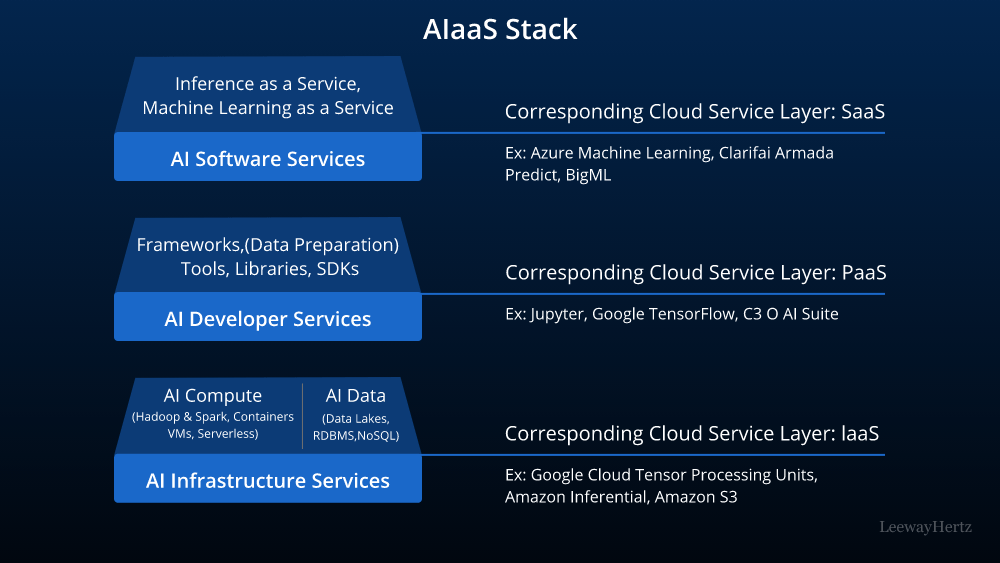
1. Democratizing AI: AIaaS is all about making AI accessible to a wider audience. It eliminates the barrier of entry for organizations with limited resources, enabling them to leverage the power of AI without making massive upfront investments. This democratization of AI fosters innovation and allows businesses to compete on a level playing field.
2. Cost-Efficiency: Developing and deploying AI models from scratch demands significant financial resources. AIaaS providers offer pre-built models and infrastructure, reducing the financial burden. This pay-as-you-go model allows businesses to scale up or down according to their needs, optimizing costs and resource allocation.
3. Rapid Deployment: AIaaS accelerates the deployment of AI solutions. Instead of spending months building models, organizations can integrate AI functionalities swiftly, thus seizing opportunities and responding to challenges in real-time.
4. Access to Expertise: Building AI systems requires expertise in machine learning, data science, and engineering. AIaaS eliminates the need for organizations to hire specialized talent. The providers offer ready-made solutions developed by experts, allowing businesses to harness AI without having an in-house team of data scientists.
5. Flexibility and Customization: AIaaS platforms offer a range of AI services that can be tailored to specific business needs. From image recognition to natural language processing, businesses can choose the services that align with their goals and objectives.
6. Scalability: As businesses grow, their AI requirements evolve. AIaaS systems are designed to scale effortlessly, accommodating increased workloads and data processing demands without major overhauls.
7. Risk Mitigation: Implementing AI involves inherent risks, such as model inaccuracies or biases. AIaaS providers often offer solutions that have been rigorously tested and fine-tuned, minimizing the risk of faulty AI implementations.
8. Focus on Core Competencies: Outsourcing AI capabilities to AIaaS providers allows businesses to concentrate on their core competencies. They can redirect their resources and efforts towards innovation, strategy, and improving their products or services.
9. Accessibility for Small Businesses: Small businesses often lack the resources to develop AI systems. AIaaS levels the playing field by enabling even the smallest of enterprises to integrate AI into their operations, thus fostering competition and diversity within industries.
10. Integration with Cloud Services: Many AIaaS offerings are integrated with cloud computing platforms, making it easier for businesses to seamlessly incorporate AI into their existing technology stack. This integration enhances overall operational efficiency.
11. Real-time Insights: AIaaS facilitates real-time data analysis and insights. Businesses can harness AI-powered analytics to make informed decisions promptly, gaining a competitive edge in dynamic markets.
12. Continuous Innovation: AIaaS providers continually update and refine their offerings as AI technology advances. Businesses can leverage the latest advancements without worrying about the obsolescence of their AI systems.
13. Regulatory Compliance: AI systems often need to adhere to industry-specific regulations. Many AIaaS providers ensure that their offerings comply with relevant standards, saving businesses the hassle of navigating complex regulatory landscapes.
14. Environmental Impact: Building and maintaining on-premises AI infrastructure can be energy-intensive. AIaaS promotes sustainability by allowing organizations to share computing resources in data centers, reducing the overall environmental footprint.
15. Global Accessibility: AIaaS transcends geographical barriers, enabling businesses and individuals from around the world to tap into AI capabilities. This global accessibility contributes to the dissemination of knowledge and expertise.
In conclusion, AI as a Service (AIaaS) is transforming the landscape of AI adoption by making the technology more accessible, cost-effective, and adaptable. By providing ready-made AI solutions and eliminating the need for extensive in-house expertise, AIaaS democratizes AI and empowers businesses of all sizes to harness its potential. As AI technology continues to advance, AIaaS will likely play a pivotal role in accelerating innovation and driving economic growth across various sectors.

 Jasper's Video Blog
Leave a comment