In recent years, Artificial Intelligence (AI) has emerged as a transformative technology, revolutionizing industries across the globe. From healthcare and finance to marketing and manufacturing, AI’s potential to enhance efficiency, accuracy, and decision-making processes is undeniable. However, implementing AI solutions can be challenging for many businesses, requiring substantial investments in infrastructure, expertise, and maintenance. This is where “AI as a Service” (AIaaS) steps in as a game-changer, providing companies with accessible and cost-effective AI solutions tailored to their specific needs.
Defining AI as a Service
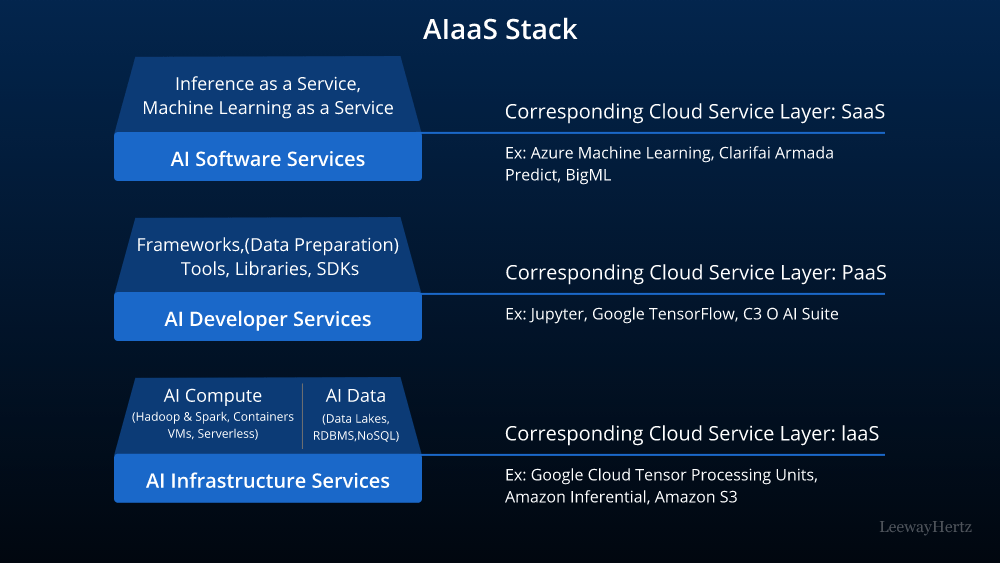
AI as a Service refers to the cloud-based delivery of AI capabilities and tools on a subscription basis. By making AI resources available on-demand, businesses can harness the power of AI without incurring the high costs associated with building and maintaining an in-house AI infrastructure. AIaaS providers offer a range of services, from basic functionalities like natural language processing and image recognition to more sophisticated applications such as predictive analytics and machine learning.
The Advantages of AI as a Service
- Cost-Effectiveness: One of the primary advantages of AIaaS is its cost-effectiveness. Businesses can avoid substantial upfront expenditures on hardware, software, and AI specialists. Instead, they can opt for flexible pricing models, paying only for the resources they use, which can lead to significant cost savings.
- Scalability: AIaaS offers the ability to scale AI capabilities according to the evolving needs of the business. Whether a company requires minimal AI processing at the beginning or experiences rapid growth, AIaaS providers can easily accommodate fluctuations in demand.
- Accessibility: Small and medium-sized enterprises (SMEs) can now access cutting-edge AI technologies that were once exclusive to larger corporations. AIaaS democratises AI, fostering innovation and competition across industries.
- Rapid Deployment: Implementing AI solutions traditionally involves lengthy development cycles. AI as a Service streamlines this process, allowing businesses to deploy AI applications quickly and efficiently, thus gaining a competitive edge in the market.
- Maintenance and Updates: AIaaS providers handle the maintenance and updates of AI systems, ensuring optimal performance and security. This offloads the burden from businesses, enabling them to focus on core operations.
Use Cases of AI as a Service
- Customer Service: AI-powered chatbots and virtual assistants enable businesses to offer 24/7 support to customers, answering queries, resolving issues, and providing personalized recommendations.
- Data Analysis: AIaaS facilitates data-driven decision-making by processing vast amounts of data quickly and extracting valuable insights, empowering businesses to enhance operational efficiency and identify opportunities.
- Image and Speech Recognition: Industries such as healthcare, retail, and security benefit from AI image and speech recognition capabilities. AIaaS providers offer pre-trained models or the option to develop custom models for specific applications.
- Predictive Analytics: AI-powered predictive analytics allows businesses to forecast trends, identify potential risks, and optimize processes for better outcomes.
- Natural Language Processing (NLP): NLP services enable sentiment analysis, language translation, and content summarization, among other applications, facilitating better communication and understanding of user data.
Challenges and Considerations
While AI as a Service offers numerous advantages, businesses must be aware of certain challenges and considerations:
- Data Security and Privacy: AIaaS requires sharing sensitive data with third-party providers, necessitating robust security measures and compliance with data protection regulations.
- Integration with Existing Systems: Ensuring seamless integration with existing infrastructure and applications may present technical challenges.
- Customization: While AIaaS providers offer various solutions, some businesses may require highly specialized or unique AI applications, which may not be readily available.
Conclusion
AI as a Service represents a pivotal shift in the way businesses adopt and implement AI technologies. By providing flexible, scalable, and cost-effective solutions, AIaaS enables businesses of all sizes to harness the potential of AI, driving innovation and growth across industries. As technology advances and AI capabilities expand, AI as a Service will continue to play a crucial role in shaping the future of business operations, delivering smarter and more efficient solutions to complex challenges.
To Learn More:- https://www.leewayhertz.com/ai-as-a-service/

 Jasper's Video Blog
Leave a comment