Artificial Intelligence (AI) has revolutionized numerous industries, and the fashion world is no exception. From enhancing customer experiences to streamlining supply chain management, AI is playing a crucial role in reshaping the fashion landscape. Let’s explore some of the key use cases of AI in the fashion industry:
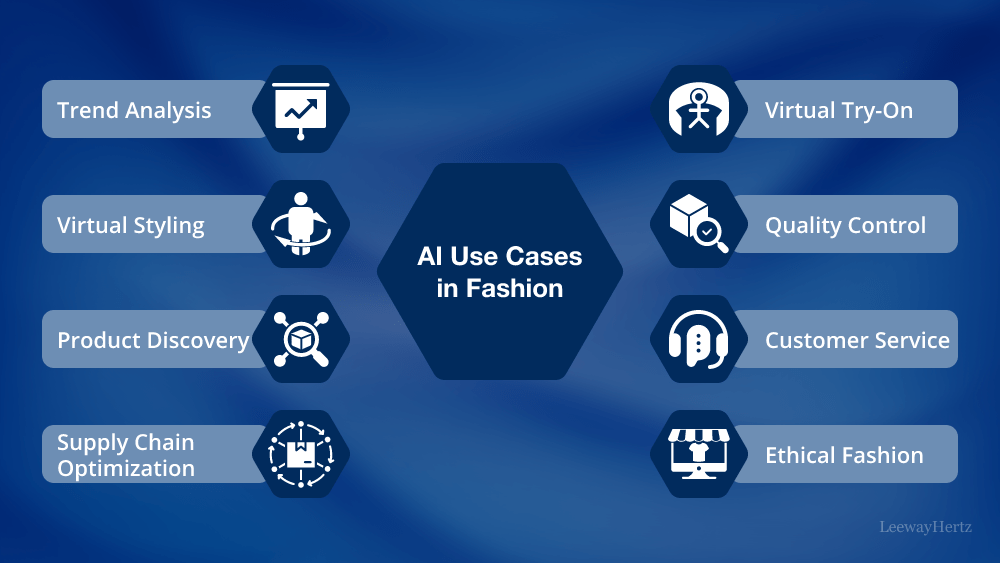
1. Personalized Recommendations: AI algorithms analyze customer data, including browsing history, purchase behavior, and preferences, to offer personalized product recommendations. This helps fashion retailers provide a more tailored and engaging shopping experience, increasing the likelihood of conversions and customer loyalty.
2. Virtual Try-On: AI-powered virtual try-on technology allows customers to visualize how clothing items would look on them without physically trying them on. Using augmented reality (AR) and computer vision, this technology helps customers make more informed purchasing decisions and reduces return rates.
3. Trend Forecasting: AI algorithms can analyze vast amounts of data from social media, fashion blogs, and runway shows to identify emerging trends. Fashion brands can leverage this information to stay ahead of the curve and design collections that resonate with current consumer preferences.
4. Supply Chain Optimization: AI streamlines the fashion supply chain by optimizing inventory management, predicting demand, and identifying potential bottlenecks. This helps reduce costs, minimize waste, and improve overall efficiency in the production process.
5. Chatbots and Customer Service: AI-powered chatbots provide instant support to customers, answering their queries, resolving issues, and guiding them through the shopping process. These virtual assistants are available 24/7, enhancing customer satisfaction and reducing the burden on human customer service representatives.
6. Image and Video Analysis: AI-driven image and video analysis technology can identify fashion trends and styles from images shared on social media platforms. This valuable data can be used by fashion brands to better understand consumer preferences and adapt their marketing strategies accordingly.
7. Sustainability and Ethical Practices: AI helps promote sustainability in fashion by analyzing the environmental impact of different materials and manufacturing processes. It also aids in monitoring supply chain practices to ensure compliance with ethical standards.
8. Size and Fit Recommendations: AI algorithms can predict customers’ sizes based on their measurements and past purchasing behavior, providing accurate size and fit recommendations. This reduces the likelihood of returns due to size issues, contributing to a more sustainable fashion ecosystem.
9. Fraud Detection and Security: AI can be used to detect and prevent fraudulent activities, such as credit card fraud and fake product listings. This safeguards both fashion retailers and their customers, creating a safer online shopping environment.
10. Social Media Marketing: AI-powered tools can analyze social media data to identify influencers, track brand mentions, and measure the effectiveness of marketing campaigns. This data-driven approach enables fashion brands to target the right audience and refine their marketing strategies for better results.
11. Automated Design and Pattern Generation: AI-driven design tools can create unique patterns and designs, helping fashion designers save time and boost creativity. These tools generate a wide range of possibilities, inspiring designers and pushing the boundaries of creativity.
12. Pricing Optimization: AI algorithms can analyze market trends, competitor pricing, and customer behavior to optimize product pricing. This ensures that fashion brands offer competitive prices while maintaining profitability.
13. Style and Outfit Suggestions: AI-powered style assistants can suggest complete outfits based on individual preferences, occasion, and weather conditions. This feature enhances the customer experience and encourages multiple item purchases.
14. In-Store Experience: AI technology can be used to enhance the in-store experience through interactive mirrors, smart shelves, and personalized offers. These innovations bridge the gap between online and offline shopping, creating a seamless shopping journey.
15. Virtual Fashion Shows: AI and virtual reality (VR) technologies enable the creation of immersive virtual fashion shows. This allows designers to showcase their collections to a global audience without the need for physical events, saving costs and reducing carbon footprint.
In conclusion, AI has become an indispensable tool in the fashion industry, transforming the way businesses operate and customers shop. From personalized recommendations to sustainable practices, the use of AI is reshaping the future of fashion, making it more innovative, efficient, and customer-centric.
To Learn More:- https://www.leewayhertz.com/ai-use-cases-in-fashion/

 Jasper's Video Blog
Leave a comment