Generative AI models have revolutionized the field of image synthesis, enabling the creation of realistic and compelling images that were once only possible through manual efforts. With recent advancements in deep learning and neural networks, building generative AI models for image synthesis has become more accessible than ever. In this article, we will explore the key steps involved in building these models, providing a concise guide for beginners. Let’s dive in!
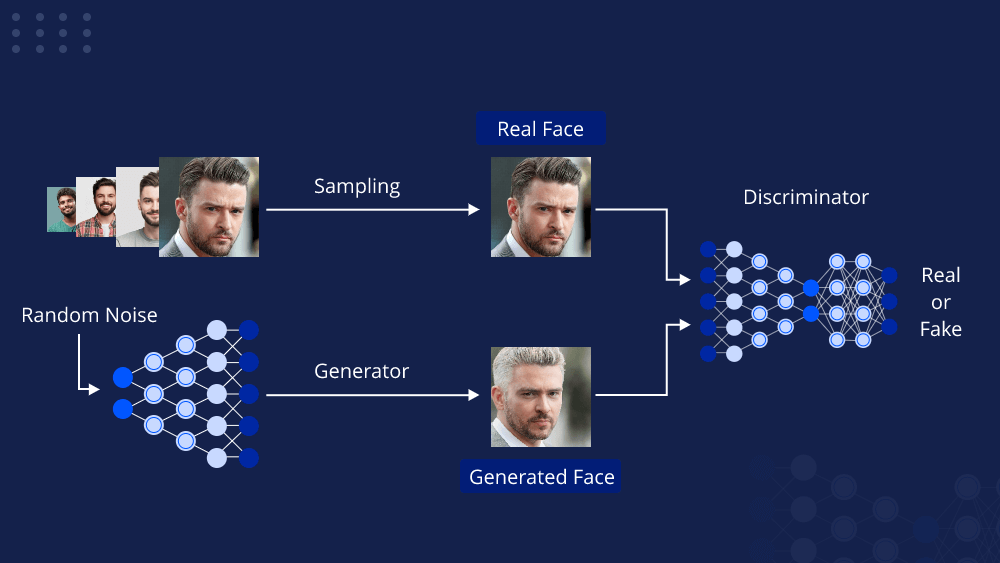
- Define the Problem: Start by clearly defining the objective of your image synthesis project. Decide whether you want to generate images from scratch, transform existing images, or perform other specific tasks like style transfer or super-resolution.
- Collect and Preprocess Data: Gather a suitable dataset for training your generative AI model. Depending on your objective, this dataset can consist of a wide range of images. Ensure that the images are properly labeled and diverse to capture the desired variations. Preprocess the data by resizing, cropping, and normalizing the images for efficient training.
- Choose a Generative Model: Select an appropriate generative model architecture for your project. Popular models for image synthesis include Variational Autoencoders (VAEs), Generative Adversarial Networks (GANs), and Autoregressive Models like PixelCNN and WaveNet. Each model has its strengths and limitations, so consider the specific requirements of your project before making a choice.
- Design the Model Architecture: Define the structure of your generative model. This includes determining the number of layers, types of activation functions, and the overall flow of information within the model. Experiment with different architectures and hyperparameters to find the optimal configuration for your specific task.
- Train the Model: Train your generative model using the prepared dataset. This involves feeding the input images to the model, calculating the loss function, and updating the model’s parameters through backpropagation. Training generative models can be computationally intensive, so make sure to leverage hardware resources like GPUs or TPUs for faster training.
- Evaluate and Fine-Tune: Evaluate the performance of your trained model using appropriate evaluation metrics like Inception Score or Frechet Inception Distance. If the results are unsatisfactory, consider fine-tuning the model by adjusting hyperparameters, increasing training iterations, or applying regularization techniques.
- Generate New Images: Once your generative model is trained and evaluated, you can use it to generate new images. Provide random or guided inputs to the model and observe the output generated by the network. Experiment with different input configurations to explore the capabilities of your model and refine the generated images as needed.
- Iterate and Improve: Building generative AI models is an iterative process. Continuously analyze the results, gather feedback, and refine your model accordingly. Consider incorporating advanced techniques such as conditional image synthesis, progressive growing, or multi-modal generation to enhance the quality and diversity of the generated images.
- Deploy and Integrate: When you are satisfied with the performance of your generative AI model, deploy it in your desired environment. This could involve integrating it into an existing application, creating a user-friendly interface, or deploying it as a web service. Ensure that the deployment process is scalable and efficient to handle different user demands.
- Stay Up to Date: The field of generative AI is evolving rapidly. Stay updated with the latest research, new architectures, and improved techniques. Join online communities, attend conferences, and explore open-source repositories to stay at the forefront of generative AI advancements.
In conclusion, building generative AI models for image synthesis involves a systematic approach starting from problem definition, data collection, model selection, training, evaluation, and deployment. By following these steps and continuously refining your models, you can unlock the power of generative AI to create impressive and realistic images for a variety of applications. Happy generating!
To Learn More:- https://www.leewayhertz.com/a-guide-on-generative-ai-models-for-image-synthesis/

 Jasper's Video Blog
Leave a comment